
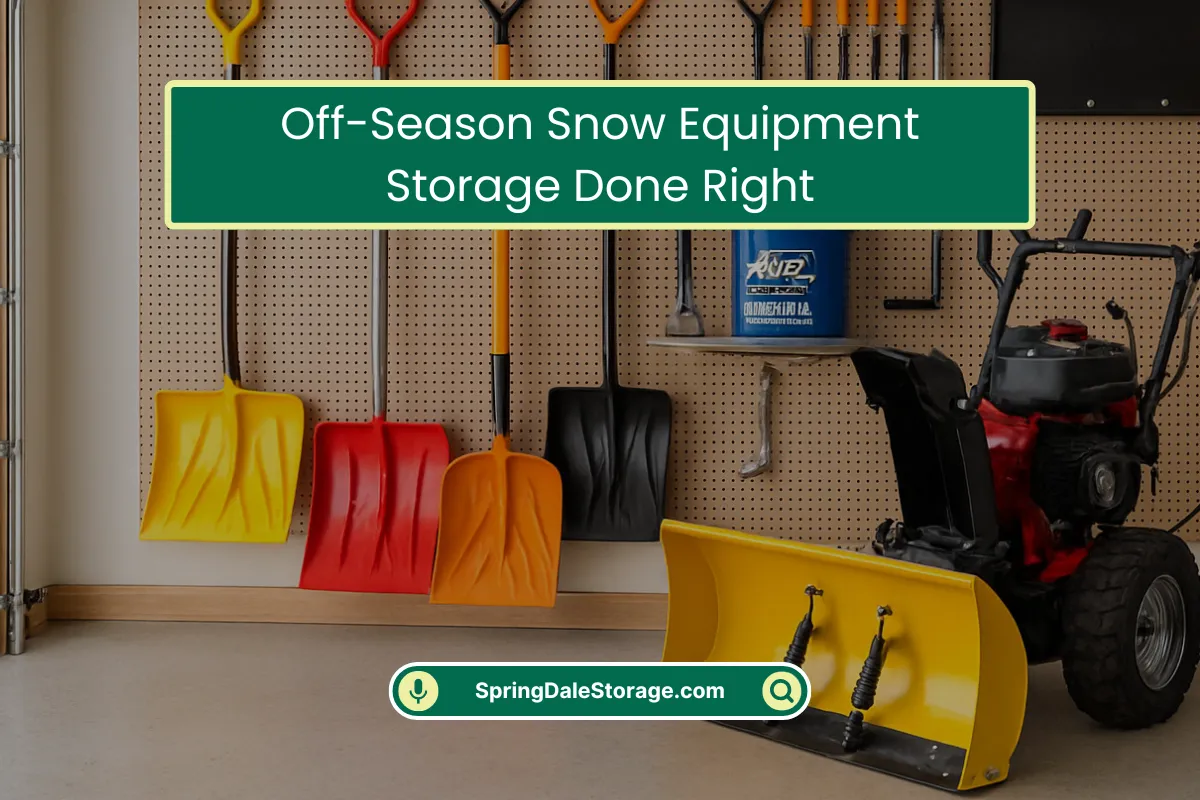
You know what? I’m just gonna talk to you. Not as a writer, not as a blogger, but as the guy who owns this storage place and has lived through ten winters in this town. My name’s Mike. I drink my coffee black, and my back still hurts from shoveling my driveway in 2018 before I wised up.
Let me tell you about my buddy, Ray. Ray runs a small plowing business—just him, his Ford F-250, and a front-mounted plow. Last spring, Ray did what he always does. He backed the truck into his crowded side yard, disconnected the plow, and left it sitting on a couple of cinder blocks. He threw a blue tarp over it, secured it with a bungee cord that was older than his kid, and called it a day.
Fast forward to November. First big snow. Ray hooks up the plow, hits the hydraulic lever, and… nothing. The blade won’t lift. He’s out there at 4 a.m., in his pajamas under his coveralls, swearing with a flashlight in his mouth. Turns out, the hydraulic rods had been exposed all summer. Rain got under the tarp, morning dew settled on them, and they rusted just enough to pit the metal. The seals were shot. The repair took two days and cost him $900. He also lost three clients because he couldn’t get to them.
Ray learned the hard way. I don’t want you to be Ray.
Storing this stuff isn’t about reading a manual. It’s about respecting what the equipment just went through. Think about it. That snowblower ate salty, sandy, gravelly snow for months. Your plow blade scraped over asphalt and ice melt chemicals. If you just park it wet and walk away, you’re basically letting it rust in slow motion.
Here’s what I actually do. Not from a book, but from my own garage.
First, I wash it like I’m detailing my car
But not with fancy soap. I use the hose, a big brush, and sometimes just a bucket of water with a splash of dish soap. I get down on my knees and scrub the underside of the snowblower deck. I spray out the chute until no more pebbles come out. For a plow blade, I hit every joint, every bolt, the cutting edge—everything. The goal is to get every single grain of salt off. Salt is the enemy. Then, I let it sit in the sun. All day. I want it so dry you could eat off it.
The gas thing
People make this way too complicated. I use the K.I.S.S. method: Keep It Simple, Stupid. In the last storm of the year, I make sure I’m running the snowblower almost empty. Then, the day I store it, I go buy fresh gas. Not gas that’s been in my can since last summer. Fresh. From the station. I put in just enough to run the engine for five minutes. While it’s running, I shut the fuel valve off and let it burn the gas in the carburetor dry. That’s it. Empty carb, mostly empty tank. No stabilizer needed if you’re brave, but a little won’t hurt. The point is, don’t let old gas sit in the tiny parts.
The “tuck-in” stuff I always forget but regret when I do:
- Grease: I have a grease gun. I find every single nipple on the plow frame and I pump grease until the old, dirty stuff squirts out. This forces out water and dirt.
- The Battery: I take it out. I bring it to my basement. I put it on a wooden shelf—my dad swore concrete floors drain them, and I’m not arguing with Dad. I write “SNOW BLOWER” on a piece of tape on it so I don’t mix it up with the lawnmower battery in the fall.
- The Cylinders: If you have a plow with hydraulic rams, lower the blade all the way to the ground to retract the rods. If you can, get little rubber caps for the ends to keep dust out.
Now, the real problem. Where?
This was my annual headache. My garage is a single. In the summer, that’s where my wife parks her car. Period. End of discussion. The shed? That’s for the mower, the grill, the patio cushions. The plow blade or the bulky snowblower doesn’t fit without a major reshuffle every time I need the lawnmower.
Leaving it outside is a joke. A tarp traps moisture and turns into a solar cooker for rust. It also screams “STEAL ME” to anyone walking by.
So here’s my dirty little secret, even though I own the place: I use one of my own storage units. No, really. I have a 10×15 that I rent to myself for a family discount (my accountant hates this). Once my gear is clean, dry, and prepped, I load it into the unit.
And it’s glorious.
It’s not a dusty shed. It’s a clean, locked, dry space. I wheel the snowblower in, set the plow blade against the wall, hang the battery in a milk crate on a shelf. I close the metal door. I put a lock on it. And I don’t think about it for six months. No shuffling, no worrying about rain, no mice building condos in the engine air box. The unit is dark and stable. It’s like putting the equipment into a coma.
That’s the whole point we’re trying to make here. It’s not just about renting space. It’s about giving your expensive, hard-working gear a proper off-season home that you don’t have to manage. You do the smart prep work, and we provide the perfect, hassle-free closet for it to sleep in.
The Bottom Line
When that first snow warning flashes on your phone, you won’t feel dread. You’ll feel prepared. You’ll drive over, unlock the door, and your stuff will be right where you left it—dry, clean, and ready. You’ll be the one making coffee while your neighbor is recreating my buddy Ray’s 4 a.m. flashlight drama.
Do the work now. Find it a real home. Your back, your wallet, and your future self on a cold morning will thank you. Now, if you need me, I’ll be in my office, drinking black coffee and watching Frank try to fit a kayak and a snowblower into the same 8×8 shed. Some guys never learn. Don’t be that guy.







0 Comments