
Alright, let’s get real for a minute. Remember that gorgeous wooden dresser you inherited? The one you lovingly stored in your garage last fall? And when you pulled it out this spring, it had this weird white film and the drawer was stuck shut for good?
Yeah. Me too. I learned that lesson the hard and expensive way.
Winter, man. It doesn’t just mess with your commute and your heating bill. It’s like a silent, sneaky bully for anything you’ve got tucked away in storage. It’s not the cold itself that’s the worst of it. It’s the swing. The “28 degrees at night, 55 by afternoon” dance that happens for months. That dance creates condensation. And condensation is just a fancy word for your stuff getting quietly, slowly damp.
Think about your breath fogging up a window. Now imagine that happening inside a box of your old yearbooks or around the legs of your dining room table. Not great.
So, after that dresser disaster, I became a bit of a storage nerd. Here’s the stuff that actually works, born from my own mistakes and victories.
First up: The Garage is a Traitor
I used to think my garage was a safe haven. It’s not. It’s basically a slightly sheltered version of the outdoors. If you’re storing anything you truly care about in there—photo albums, that guitar you swear you’ll learn to play, nice furniture—you’re in a fight with the elements. And you will lose. Trust me.
The “Why Is It Damp?!” Box Mystery
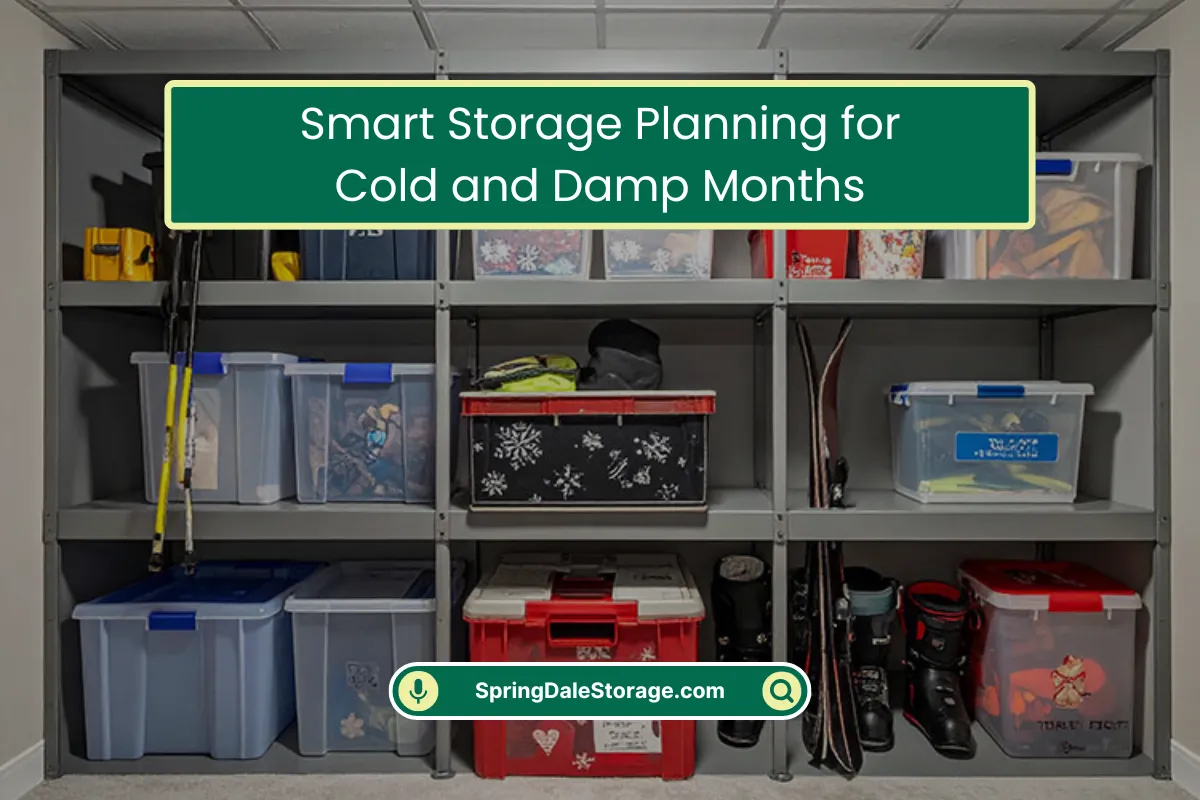
Here’s a classic blunder I made for years. I’d pack my summer clothes into a nice cardboard box, tape it shut, and stack it in the corner. Come spring, the box would feel… spongy. The clothes inside would have this faint, sad smell. Why? Cardboard breathes. It soaks up the damp winter air like a sponge and passes it right along to your favorite t-shirts. The fix isn’t complicated, but it’s non-negotiable: Plastic bins with the clicky lids. The kind you get at the big box store. They’re a barrier. A wall between your stuff and the soggy air. Worth every penny.
Your Floor is the Enemy
Concrete floors are cold. Cold surfaces + warmer air = wet rings of condensation. If you set a cardboard box directly on the garage or storage floor, the bottom will wick up moisture. I learned to use anything to create an air gap. Old pallets are gold. Even just laying down a bunch of 2x4s works. Get your stuff up off the ground. Just a couple of inches makes a world of difference.
The Secret Weapon: Dirt Cheap & Genius
You know those hanging moisture absorber bags you see in closets? The ones with the little pellets? Get a bunch. Toss one in every plastic bin, hang a few around the perimeter of your storage space. They fill up with water. It’s wild. It’s proof of how much moisture is just floating around, trying to ruin your day. Check them mid-winter and swap them out. It’s deeply satisfying.
Okay, but what about the big, awkward stuff?
The patio set, the grill, the kayak? You can’t bin those. For that, I finally caved and did what I should have done years ago. I got a small, climate-controlled unit at a place like County Line Storage. Hear me out.
I used to think “climate control” was a fancy term for “more expensive.” It’s not. It’s the “I’m not doing the condensation tango anymore” term. It means the space is kept at a steady, moderate temperature and humidity level year-round. No wild swings. No dampness. It’s like putting your belongings in a comfortable, neutral hotel room for the winter. My patio furniture cushions don’t get that weird mildew smell. My tools don’t get a speck of rust. After my dresser heartbreak, it’s the peace of mind I was desperate for. I’m not pushing you, I’m just telling you—for the stuff that really matters, it’s a game-changer.
The Five-Minute Winter Check
Sometime in January, when you’re bored, go look at your storage. Don’t just walk in and walk out. Press your hand on the concrete. Is it wet? Are the moisture absorbers full? Do you see any mouse droppings (they’re looking for a winter home too)? This five-minute scout mission can catch a small problem before it becomes a springtime catastrophe.
Look, winter is hard enough. Shoveling, freezing your fingers, the whole deal. Don’t let it win by wrecking the stuff you’ve worked for. A little prep, some plastic bins, and maybe a little help from the pros can make all the difference. You’ve got this. And your future self, opening that bin of perfect, dry summer clothes next May, will be so grateful you did.









0 Comments