
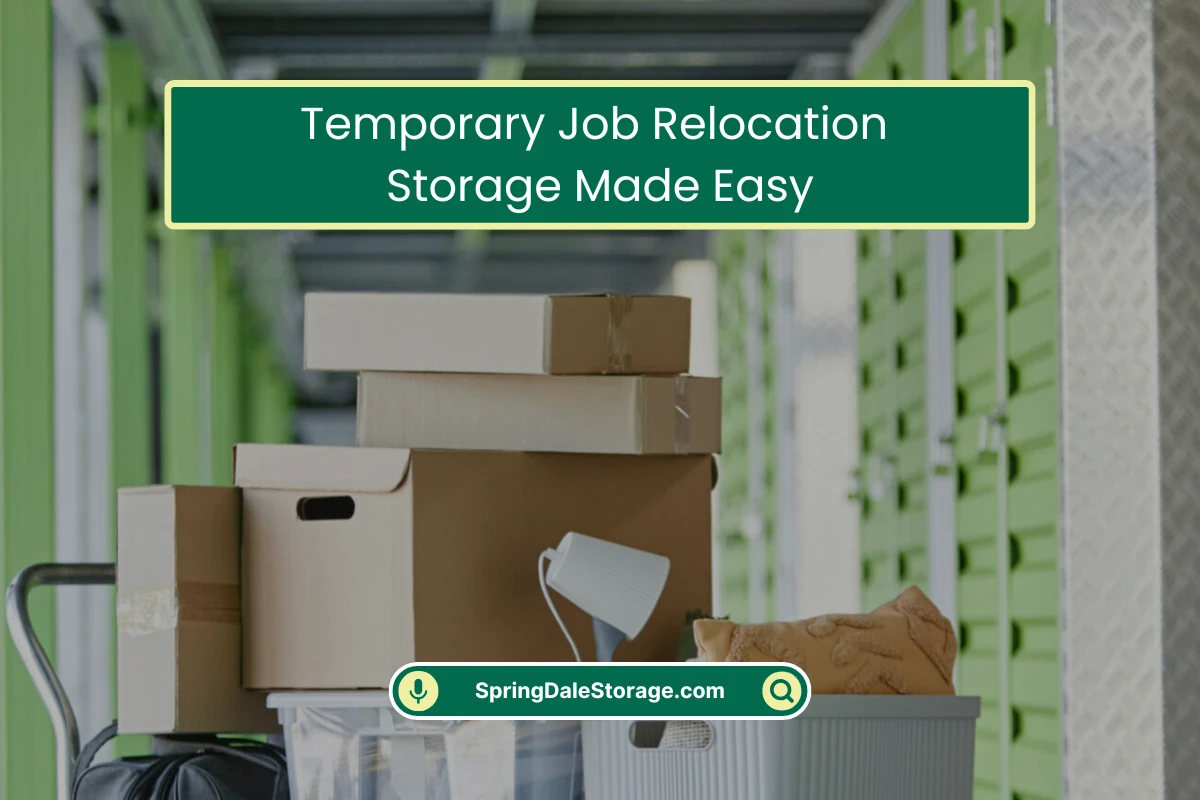
So, you just got the email. Or maybe you got the call.
“Congratulations! We need you in the Charlotte office for the next six months to oversee the project launch.”
Your first reaction is probably excitement. A new city, a new challenge, maybe even a per diem. But then, about thirty seconds later, the panic sets in. You look around your apartment or your house and think, What on earth am I going to do with all my stuff?
We’ve been there. Well, maybe not in your specific shoes, but we’ve helped hundreds of people who are exactly where you are right now. Temporary relocation is a weird beast. It’s not a permanent move, but it’s also not a vacation. You’re stuck in the middle, and your furniture and belongings get stuck right there with you.
Let’s talk about how to navigate this without losing your mind—or your security deposit.
The “Furniture Dilemma” Nobody Talks About
When you get a temporary assignment, the logistics usually go something like this: The company might pay for your flight, they might put you up in a corporate apartment or an extended-stay hotel, and they’ll handle your travel expenses. But what about the three-bedroom house you’re leaving behind?
You have a few options here, and honestly, most of them are pretty terrible:
- The “Leave It” Strategy: You could leave all your furniture right where it is. But if you’re renting out your place while you’re gone, most tenants don’t want to live with your grandmother’s china cabinet. It’s awkward for everyone.
- The “Sell It” Panic: You could try to sell everything on Facebook Marketplace in a mad rush. This usually means you’re selling your $2,000 sofa for $200 just to get rid of it. Then, when you come back in eight months, you have to spend thousands of dollars buying new stuff. It’s a financial double-whammy.
- The “Move It” Mistake: You could drag it all with you. But corporate housing is usually furnished. Paying to move a truck full of furniture to another city just to have it sit in a storage unit there is throwing money out the window.
The smart play? It’s a hybrid approach. You take your suitcase, your laptop, and maybe your favorite pillow. Everything else? It needs a safe, temporary home until you get back.
Why Your Stuff is Better Off Staying Put
When we talk to people facing a temporary relocation, the biggest worry isn’t actually the job. It’s the stuff. It’s the anxiety of wondering if your leather couch is getting ruined in a humid garage somewhere, or if your boxes are going to get crushed.
You need a solution that gives you peace of mind so you can actually focus on the job you’re being sent to do. You don’t want to be worrying about your belongings while you’re trying to impress the new boss.
That’s where we come in. Think of our storage facility as a “pause button” for your life. You’re not selling, you’re not abandoning, you’re just pausing.
When you store with us, you’re not just renting an empty concrete box. You’re buying certainty. You know that your things are clean, dry, and secure. Whether you need a small closet-sized unit for your studio apartment belongings or a larger space for a house full of furniture, we have the flexibility to match your timeline. Need it for three months? Easy. Need to extend to nine because the project got delayed? No problem. We work with your schedule, not the other way around.
Making the Transition Smooth: A Quick Checklist
To help you get organized before you head out on your temporary assignment, here’s a simple game plan to follow. This will save you from that last-minute scramble:
- Purge Before You Pack: Temporary moves are the perfect time to declutter. Go through your closets. If you haven’t worn that jacket in two years, donate it. Why pay to store garbage? Lighten your load now, and you’ll have less to unpack when you get home.
- Inventory Your Life: This sounds tedious, but grab your phone and take a video of everything you’re putting into storage. Walk around the unit and narrate. “Box A: Kitchen gadgets. Box B: Winter coats.” This way, if you need something specific while you’re away, you can check the video rather than guessing.
- Pack a “Welcome Home” Box: This is a pro-tip. In your storage unit, leave one clearly marked box right by the door. Inside, put the essentials you’ll need the moment you walk back into your empty house when you return: a couple of towels, bed sheets, a coffee maker, and a change of clothes. Trust us, when you walk in after a long flight home, you won’t want to dig through fifteen boxes to take a shower.
- Consider Climate Control: If you’re storing wooden furniture, electronics, or important documents for a temporary period, don’t skimp on climate control. Heat and humidity can warp wood and damage electronics beyond repair. Our climate-controlled units ensure that when you open the door six months from now, it smells exactly the same as the day you closed it.
Focus on the Future, Not the Furniture
Temporary relocation is a huge opportunity. It’s a chance to fast-track your career, see a new city, and prove your value to your company. But it’s really hard to network and focus if, in the back of your mind, you’re worried about a leaky roof back home or your stuff getting stolen.
By putting your belongings into secure storage, you’re mentally freeing yourself. You’re drawing a clear line between “home life” and “work life.” Your home life is on pause, safely waiting for you. Your work life is happening right now.
So, pack your bags, book your flight, and let us handle the heavy lifting—literally. When the assignment is over and you come back ready for the next chapter, your stuff will be right here waiting for you, safe and sound.
We’re more than just a place to dump your boxes. We’re your partner in this temporary chaos, making sure that when the job is done, coming home feels exactly like… coming home.




0 Comments